






An Australian owned manufacturer delivering sustainable, high-performance commercial lighting through advanced manufacturing.
Industrial
Applications

Industrial
lighting with Novon
Industrial environments place unique demands on lighting. From manufacturing facilities and warehouses to logistics centres and processing plants, lighting must deliver exceptional performance while supporting workplace safety, operational efficiency and long-term reliability in demanding conditions.
With extensive experience supporting industrial and manufacturing projects, Novon understands the challenges of delivering lighting solutions that perform in harsh environments. Supported by Australian design and engineering expertise, comprehensive product testing and rigorous quality assurance, we partner with engineers, contractors, facility managers and asset owners to deliver lighting solutions that balance performance, durability and whole-of-life value.
Understanding
Industrial
Lighting Design
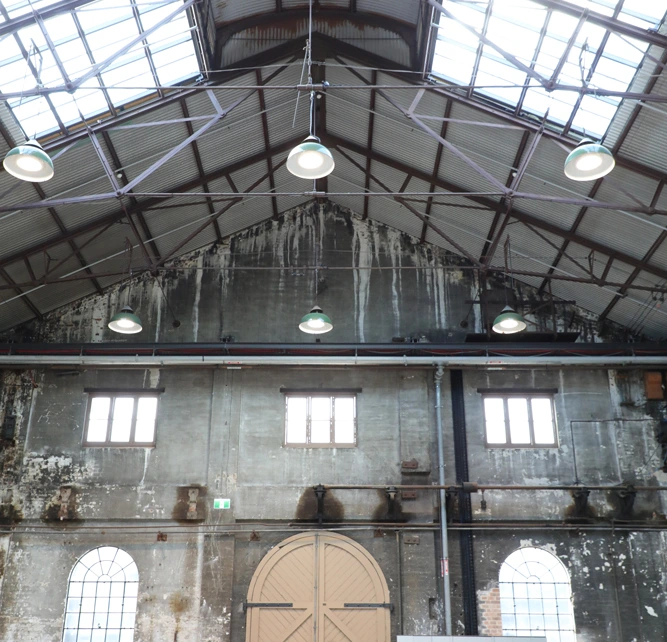
Industrial lighting is about more than achieving the required illuminance levels. Effective lighting design improves workplace safety, supports operational efficiency and reduces maintenance while performing reliably in challenging environments. Australian Standards provide the framework for compliance, but successful industrial lighting also considers durability, environmental conditions, energy efficiency and long-term asset performance.
Key Standards & Guidelines
AS/NZS 1680 – Interior & Industrial Workplace Lighting
AS/NZS 1680 provides guidance for lighting industrial workplaces, helping ensure lighting is appropriate for the tasks being performed while supporting worker safety and productivity.
Key considerations include:
- Recommended illuminance levels for industrial tasks.
- Uniform illumination to improve visibility.
- Glare control where visual tasks require precision.
- Appropriate colour rendering for safe operation.
- National Construction Code (NCC)
The National Construction Code promotes energy-efficient lighting through:
- High-efficiency LED lighting.
- Intelligent lighting controls.
- Reduced energy consumption while maintaining lighting performance.
- AS/NZS 60598 – Luminaire Safety
This standard ensures luminaires meet strict requirements for:
- Electrical safety.
- Mechanical durability.
- Safe operation in demanding environments.
- Long-term product reliability.
- Workplace Health & Safety (WHS)
Lighting plays an important role in supporting safe workplaces by improving visibility, reducing hazards and helping workers safely perform everyday tasks.

Key
Industrial
Lighting Design Considerations
Workplace Safety
Appropriate lighting improves visibility throughout industrial facilities, helping workers identify hazards, safely operate equipment and move confidently throughout the workplace.
Durability for Harsh Environments
Industrial lighting often operates in environments exposed to dust, moisture, vibration, chemicals or high temperatures. Selecting robust luminaires designed for these conditions improves long-term reliability.
Ease of Maintenance
Industrial facilities often have high ceilings or difficult access. Long-life luminaires and lighting systems that minimise maintenance requirements help reduce disruption and lower operating costs.
Energy Efficiency
Industrial facilities frequently operate for extended hours, making energy efficiency an important consideration. High-performance LED lighting and intelligent control systems help reduce energy consumption while maintaining lighting quality.
Reliability & Asset Performance
Reliable lighting is essential for maintaining productivity and minimising downtime. Quality luminaires with proven performance help reduce maintenance requirements and support long-term operational efficiency.
Flexibility & Future Upgrades
Lighting systems should accommodate changing production layouts, equipment upgrades and future operational requirements without requiring significant infrastructure changes.

Why These Standards & Design Considerations Matter
Improving Workplace Safety
Well-designed lighting supports safer workplaces by improving visibility, reducing hazards and helping employees perform tasks with greater confidence.
Reducing Maintenance & Downtime
Reliable lighting systems with long service lives reduce maintenance frequency, minimise disruption and support continuous operation in demanding industrial environments.
Lowering Operating Costs
Energy-efficient lighting and intelligent controls help reduce electricity consumption while delivering long-term savings across large industrial facilities.
Maximising Long-Term Value
Selecting lighting solutions designed for demanding environments helps improve asset performance, extend product life and reduce whole-of-life costs.
Specification Tips
When specifying lighting for industrial environments, always consider:
- Compliance with relevant AS/NZS 1680 workplace lighting requirements.
- Appropriate IP and IK ratings for the environment.
- High-efficiency LED lighting and intelligent lighting controls.
- Robust construction suited to dust, moisture, vibration or corrosive conditions.
- Long service life and simplified maintenance.
- Flexibility to support future operational changes.