








An Australian owned manufacturer delivering sustainable, high-performance commercial lighting through advanced manufacturing.
Outdoor/Urban
Applications

Outdoor/Urban
lighting with Novon
Well-designed outdoor lighting does more than illuminate public spaces. It creates safer communities, improves accessibility and enhances the way people experience the built environment. From streetscapes and parks to pedestrian pathways, civic precincts and urban developments, lighting plays a vital role in safety, wayfinding and the overall character of our public spaces.
Novon's lighting specialists understand the unique challenges of outdoor environments, where durability, optical performance and long-term reliability are critical. Supported by Australian design and engineering expertise, comprehensive product testing and rigorous quality assurance, we partner with architects, landscape architects, engineers, councils and developers to deliver lighting solutions that perform reliably while enhancing Australia's public spaces.

Understanding
Outdoor/Urban
Lighting Design
Outdoor lighting is about more than meeting minimum lighting levels. Successful lighting design balances safety, visual comfort, environmental responsibility and long-term performance while creating spaces that people want to use and enjoy. Australian Standards provide the framework for compliance, but thoughtful lighting design also considers a range of factors that influence the success of every project.
Key Standards & Guidelines
AS/NZS 1158 – Lighting for Roads and Public Spaces
The AS/NZS 1158 series provides the primary guidance for lighting roads, pedestrian areas and public spaces throughout Australia.
Key considerations include:
- Appropriate lighting classifications based on road type and pedestrian activity.
- Uniform illumination to improve visibility and reduce shadows.
- Glare control for motorists, cyclists and pedestrians.
- Safe and comfortable movement through public spaces.
- AS/NZS 4282 – Control of the Obtrusive Effects of Outdoor Lighting
Responsible outdoor lighting is about more than providing illumination. AS/NZS 4282 provides guidance for controlling:
- Light spill onto neighbouring properties.
- Disability and discomfort glare.
- Sky glow and unnecessary upward light.
- Environmental impacts on surrounding communities and wildlife.
Well-designed luminaires with precise optical control help ensure light is directed only where it is needed.
National Construction Code (NCC)
The National Construction Code promotes energy-efficient outdoor lighting through:
- High-efficacy LED lighting.
- Intelligent lighting controls and dimming strategies.
- Reduced energy consumption while maintaining required lighting performance.
- AS/NZS 60598 – Luminaire Safety
This standard ensures luminaires meet strict requirements for:
- Electrical safety.
- Mechanical durability.
- Appropriate IP and IK ratings.
- Reliable long-term performance in outdoor environments.
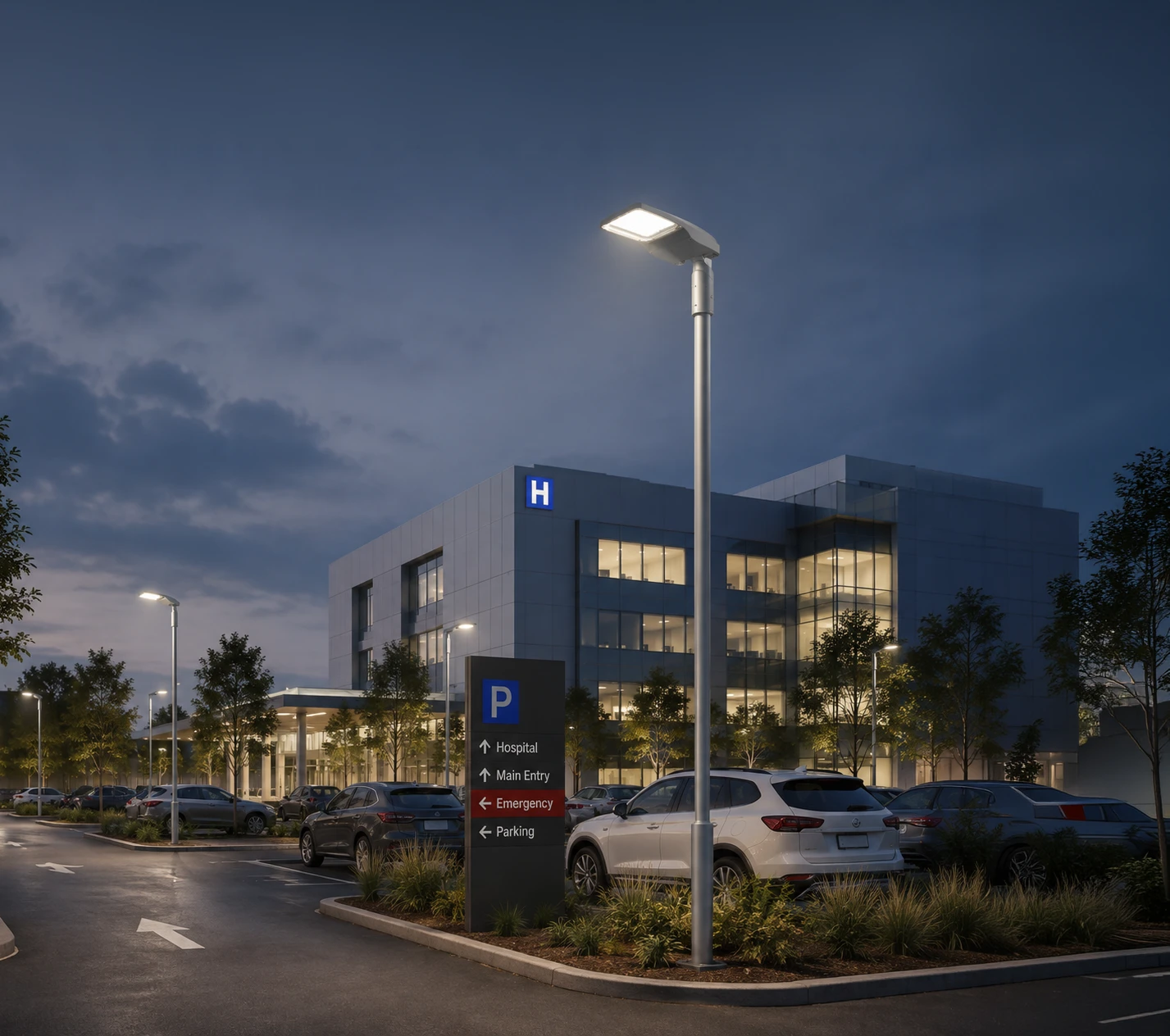
Key
Outdoor/Urban
Lighting Design Considerations
Lighting Performance
Selecting the correct lighting levels and achieving uniform illumination helps create safe, comfortable environments while improving visibility for pedestrians, cyclists and motorists.
Light Pollution
Well-designed luminaires with precise optical control minimise light spill, glare and sky glow. Directing light only where it is needed improves visual comfort, protects neighbouring communities and reduces environmental impacts.
Environmental Conditions
Outdoor lighting must perform reliably in Australia's harsh climate. Product selection should consider UV exposure, coastal environments, dust, moisture, temperature extremes and corrosion resistance to ensure long-term performance.
Durability & Maintenance
Selecting luminaires with appropriate IP and IK ratings, robust construction and a long design life reduces maintenance requirements, minimises disruption and lowers whole-of-life costs.
Energy Efficiency & Smart Controls
High-efficacy LED lighting combined with dimming, occupancy sensors and smart lighting controls helps reduce energy consumption while improving operational flexibility and supporting sustainability objectives.
Place Making & Community Safety
Lighting influences how people experience public spaces. Thoughtful lighting design improves wayfinding, enhances architectural features, encourages community use and contributes to safer, more welcoming environments.

Why These Standards & Design Considerations Matter
Compliance & Public Safety
Selecting compliant lighting products helps ensure outdoor projects satisfy Australian Standards while delivering safe, reliable illumination for pedestrians, cyclists and motorists.
Protecting Communities & the Environment
Responsible lighting design reduces glare, light spill and sky glow. This protects neighbouring properties, preserves the night environment and supports more sustainable communities.
Long-Term Asset Performance
Outdoor lighting systems are expected to operate reliably for many years in challenging environments. Selecting quality luminaires that are suited to the application reduces maintenance requirements, improves reliability and lowers whole-of-life costs.
Creating Better Public Spaces
Thoughtfully designed lighting enhances safety, encourages community use, improves accessibility and helps create public spaces that people enjoy throughout the day and into the evening.
Tip: When specifying outdoor and urban lighting, always consider:
- Appropriate AS/NZS 1158 lighting classifications.
- AS/NZS 4282 requirements for controlling obtrusive light.
- Suitable IP and IK ratings for the installation environment.
- Optical control and glare management.
- Environmental conditions and corrosion resistance.
- Energy efficiency and intelligent lighting controls.
- Long-term maintenance and asset performance.