






In healthcare environments, lighting does far more than simply illuminate a space. In some clinical settings it plays a direct role in helping medical staff assess a patient’s condition. One of the clearest examples of this is the visual detection of cyanosis, a bluish discolouration of the skin and mucous membranes that indicates dangerously low oxygen levels in the blood.
For clinicians, the ability to recognise subtle changes in skin colour canbe a critical early indicator that a patient’s condition is deteriorating.
When Technology Isn’t Enough
Modern healthcare facilities rely heavily on monitoring equipment such as pulse oximeters to track oxygen saturation. These devices are widely used in operating theatres and recovery areas, but there are situations where they maybe unavailable or may produce unreliable readings.
For example, patients experiencing poor peripheral circulation, shock or vasoconstrictive conditions can produce inconsistent sensor readings. In othercases, sensors may not be able to remain attached reliably during treatment.
In these situations, visual observation remains an essential clinical skill, and the quality of the lighting in the room becomes a key factor in helping clinicians interpret what they see.
The Role of the Cyanosis Observation Index
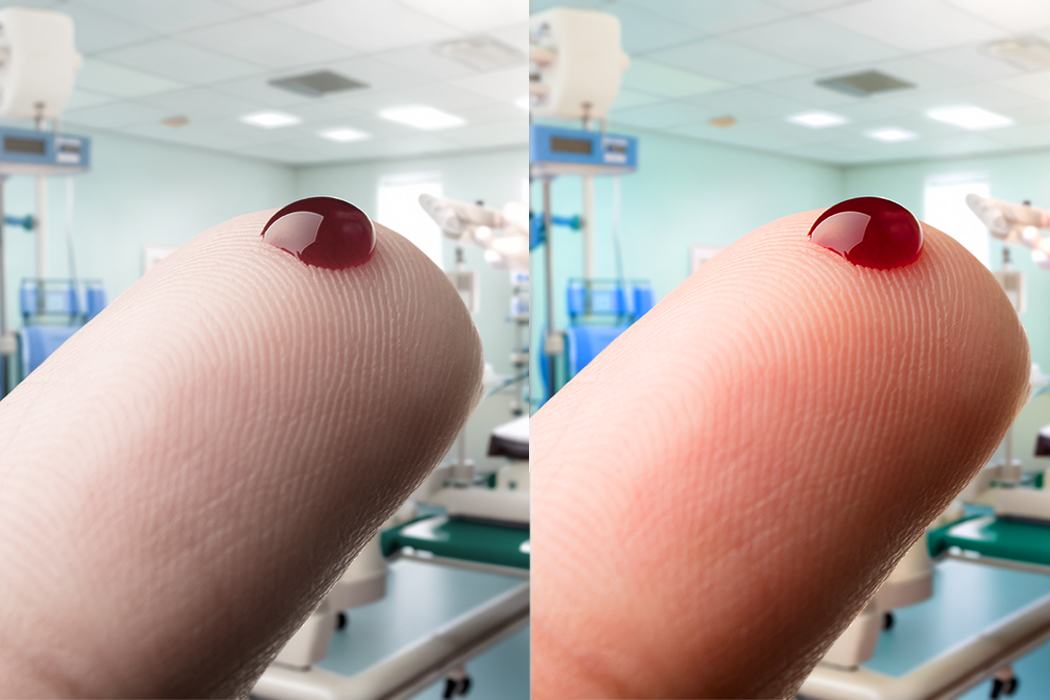
To support reliable visual detection of cyanosis, the lighting industry usesa specialised metric known as the Cyanosis Observation Index (COI).
COI measures how well a light source allows the human eye to distinguish between oxygenated blood and blood with reduced oxygen levels. Unlike brightness or colour temperature, COI specifically relates to how the spectral power distribution of a light source affects the appearance of blood and skintones.
The index is based on the colour differences observed between blood at two states of oxygen saturation when illuminated by a test light source compared with a reference light source. Lower values indicate better performance.
In simple terms:
· Lower COI values make cyanosis easier to detect
· Higher COI values can make colour changes harder to identify
What the Standard Requires
In Australia and New Zealand, the requirements for cyanosis observation lighting are defined in AS/NZS 1680.2.5:2018 – Interior and workplace lighting: Hospitals and medical tasks.
For areas where accurate visual assessment of patient colour is important, lighting systems must satisfy three key criteria:
· COI≤ 3.3
· CorrelatedColour Temperature between 3300 K and 5300 K
· Colour Rendering Index(CRI) ≥ 80
Together, these requirements ensure that healthcare lighting provides both accurate colour rendering and appropriate spectral characteristics for clinical observation.
Where Cyanosis Lighting Is Used
Not every space in a healthcare facility requires cyanosis-compliant lighting. The standard categorises treatment areas into three types, reflecting the level of clinical observation required.
Type A areas include spaces where anaesthesia or intravenous sedation is administered, such as operating theatres and recovery rooms. Type B areas involve clinical observation where skin colour assessment is important but sedation is not typically used. Type C areas cover general examination rooms where colour-based observation may be less critical.
The decision about where cyanosis-compliant lighting is required is usually made collaboratively between healthcare management, clinicians and the lightingor electrical design team.
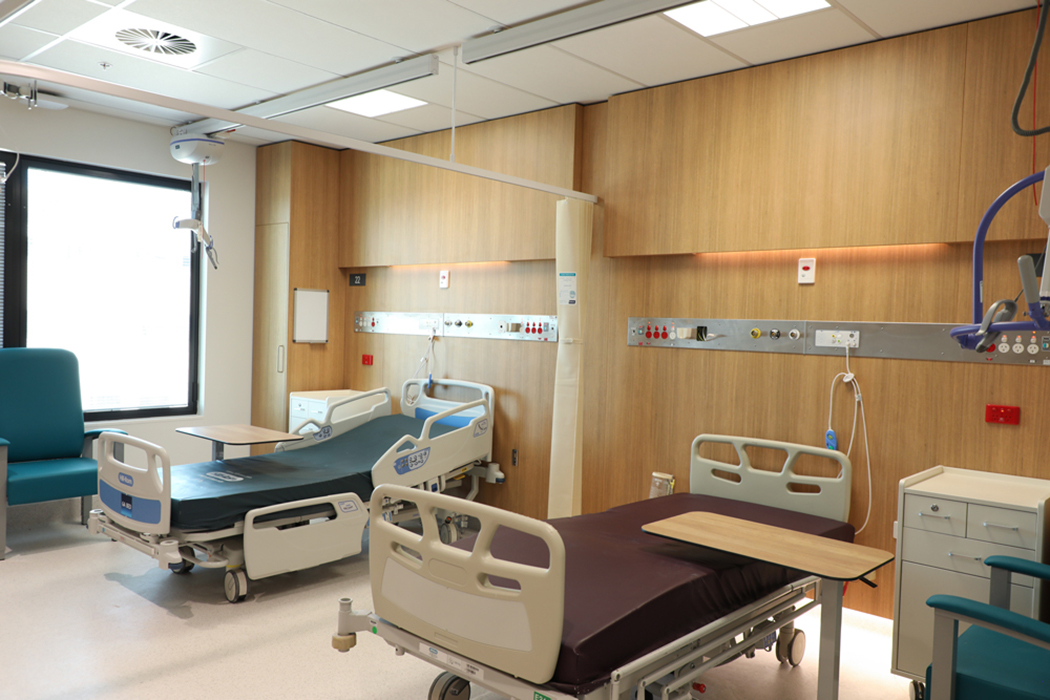
In practice, these lighting systems are commonly applied in areas such as:
· Emergency departments and resuscitation rooms
· Intensivecare and high dependency units
· Operating theatres and recovery areas
· Observation bays and treatment rooms where patient monitoring is critical
Designing Healthcare Lighting for Clinical Observation
Specifying lighting for healthcare environments requires a balance between multiple factors including visual comfort, energy performance, maintenance and compliance with clinical standards.
Where cyanosis observation is required, designers must ensure that luminaires meet the COI, CCT and CRI criteria defined in the standard. This typically requires access to detailed spectral data from manufacturers, as COI cannot be calculated without the spectral power distribution of the lightsource.
For lighting designers and healthcare engineers, this means looking beyond standard photometric information and ensuring that spectral performance is considered during specification.
Lighting as Part of Patient Care
While lighting may not always be the most visible part of healthcare infrastructure, its impact on clinical observation is significant. In spaces where clinicians rely on visual cues to assess patient condition, the spectral characteristics of the light source can influence how accurately those cues areperceived.
By ensuring that healthcare lighting systems meet the requirements for cyanosis observation, facilities help support the ability of medical staff to identify early signs of patient distress and respond quickly when it mattersmost.
Learn More
For a detailed technical explanation of COI calculations, spectral requirements and compliance with AS/NZS 1680.2.5:2018, refer to the Novon Academy technical bulletin:
Add link

Related content

Technical Bulletin: Equivalent Melanopic Lux & Melanopic Ratio in WELL v2
Lorem ipsum dolor sit amet, consectetur adipiscing elit. Suspendisse varius enim in eros elementum tristique. Duis cursus, mi quis viverra ornare, eros dolor interdum nulla, ut commodo diam libero vitae erat. Aenean faucibus nibh et justo cursus id rutrum lorem imperdiet. Nunc ut sem vitae risus tristique posuere.
Why Circadian Lighting Metrics Matter for Modern Commercial Spaces
Lorem ipsum dolor sit amet, consectetur adipiscing elit. Suspendisse varius enim in eros elementum tristique. Duis cursus, mi quis viverra ornare, eros dolor interdum nulla, ut commodo diam libero vitae erat. Aenean faucibus nibh et justo cursus id rutrum lorem imperdiet. Nunc ut sem vitae risus tristique posuere.
Technical Bulletin: Cyanosis Observation Index (COI) and AS/NZS 1680.2.5:2018
Lorem ipsum dolor sit amet, consectetur adipiscing elit. Suspendisse varius enim in eros elementum tristique. Duis cursus, mi quis viverra ornare, eros dolor interdum nulla, ut commodo diam libero vitae erat. Aenean faucibus nibh et justo cursus id rutrum lorem imperdiet. Nunc ut sem vitae risus tristique posuere.