






As LED lighting has evolved, luminaires have become smaller, brighter and more energy efficient. While these advances have improved lighting performance, they have also introduced a new challenge: controlling glare from high-intensity LED sources.
In many environments, from offices and classrooms to healthcare facilities, excessive brightness from poorly controlled light sources can lead to eye strain, visual fatigue and reduced task visibility. This is where advanced optical technologies such as Conical De-Glaring Prism (CDP) lenses play a critical role.
CDP optics help lighting designers maintain the efficiency benefits of LED lighting while significantly improving visual comfort.
Understanding Glare in LED Lighting
Glare occurs when a bright light source creates excessive contrast within the visual field. This can take two forms:
Discomfort glare, where occupants experience irritation, eye fatigue or headaches due to overly bright luminaires.
Disability glare, where reflections or bright light sources reduce the visibility of a task by lowering contrast. This can make text harder to read or create reflections on screens and glossy surfaces.
Modern LED modules are particularly prone to creating glare because they concentrate large amounts of light into very small emitting surfaces. Without careful optical control, these bright points can appear as harsh, distracting sources within a space.
The objective of good lighting design is therefore to limit direct view of the light source while still delivering effective illumination to the task area.
How CDP Lens Technology Works
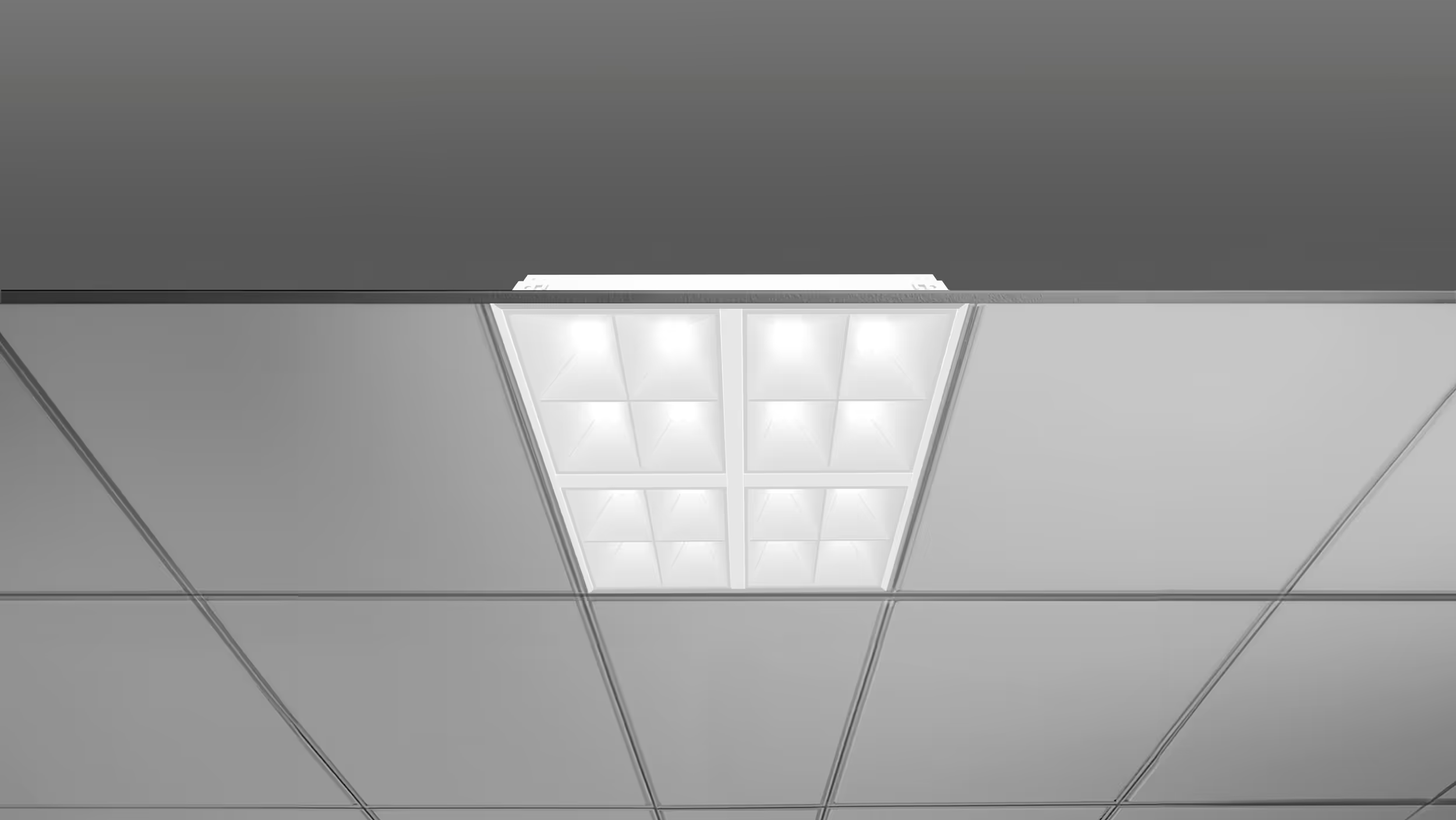
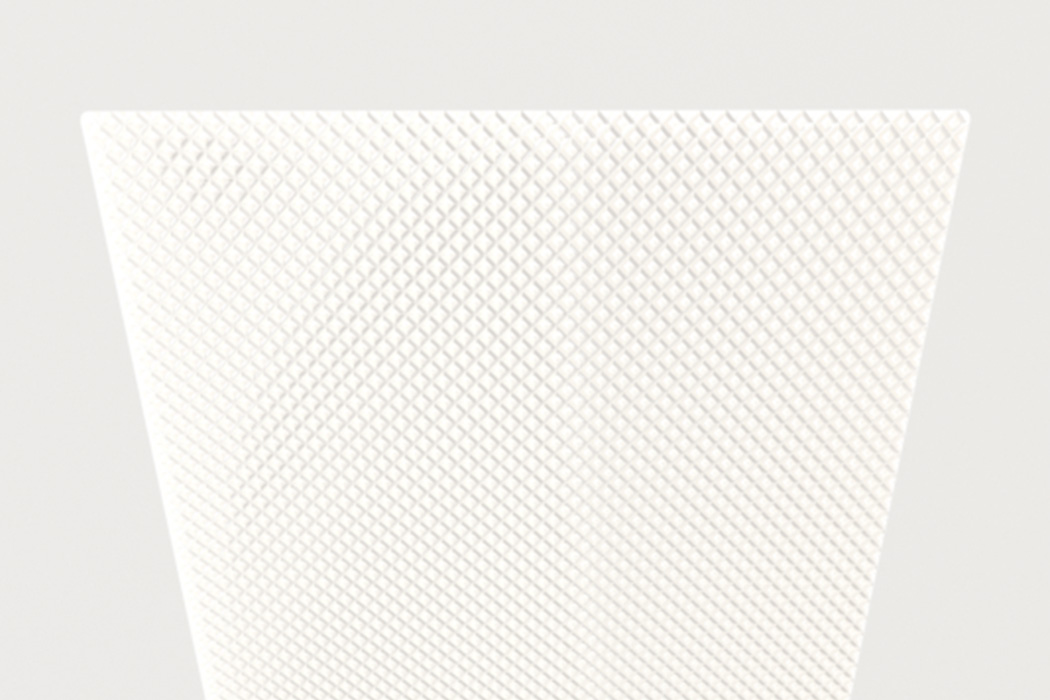
Conical De-Glaring Prism (CDP) lenses use a structured optical surface made up of an array of microscopic conical prisms. These prisms are engineered to control how light leaves the luminaire.
Rather than allowing light to spread freely in all directions, the prism geometry guides most of the light within a controlled angle from the vertical. This shielding angle typically sits around 65°, helping to reduce brightness at the angles where glare is most noticeable to occupants.
Light emitted at steeper angles is not simply absorbed or lost. Instead, the prism structure redirects or refracts it back into useful directions, improving the utilisation of the luminaire’s output.
The result is a lighting system that appears softer and more comfortable while still maintaining high optical efficiency.
Controlling Luminance Instead of Just Light Output
Traditional diffusers often reduce glare by scattering light in many directions. While this approach can soften the appearance of a luminaire, it can also reduce optical efficiency.
CDP optics take a different approach by focusing on luminance control rather than simple diffusion.
By limiting high-angle luminance and masking the direct view of LED emitters, CDP lenses help reduce the intensity of the light source within typical viewing angles. This can significantly lower perceived brightness and improve the visual comfort of occupants within the space.
For lighting designers, this type of optical control also makes it easier to achieve low Unified Glare Rating (UGR) values, which are commonly required in offices, education facilities and other visually demanding environments.
Supporting Better Visual Environments
Glare control is not just about comfort. It also affects how well people can perform visual tasks.
Excessive brightness within the field of view reduces contrast between a task and its background. This can make text, graphics or detailed work harder to see, particularly when reflections occur on computer screens or glossy surfaces.
By suppressing high-angle luminance and controlling the distribution of light, CDP lenses help maintain stronger contrast and clearer visual conditions.
In practice, this contributes to environments that feel brighter yet less visually harsh, which is especially important in spaces where people spend long periods of time.
Applications Across Different Spaces
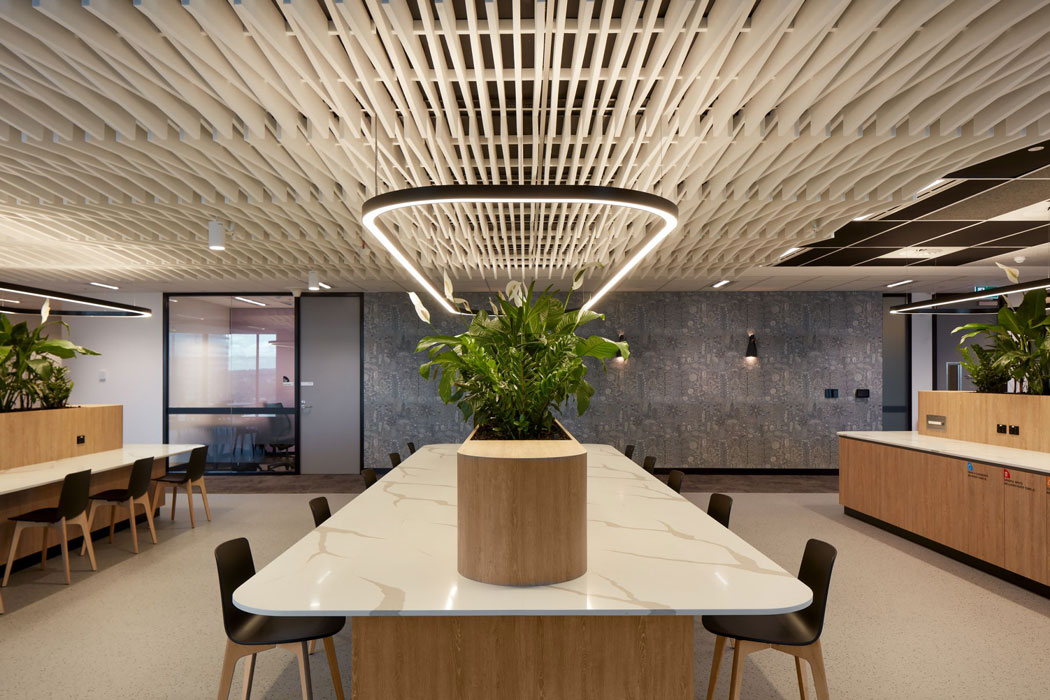
CDP lens technology and related micro-prismatic optical systems are widely used in professional lighting applications where visual comfort and performance are both critical.
Typical applications include:
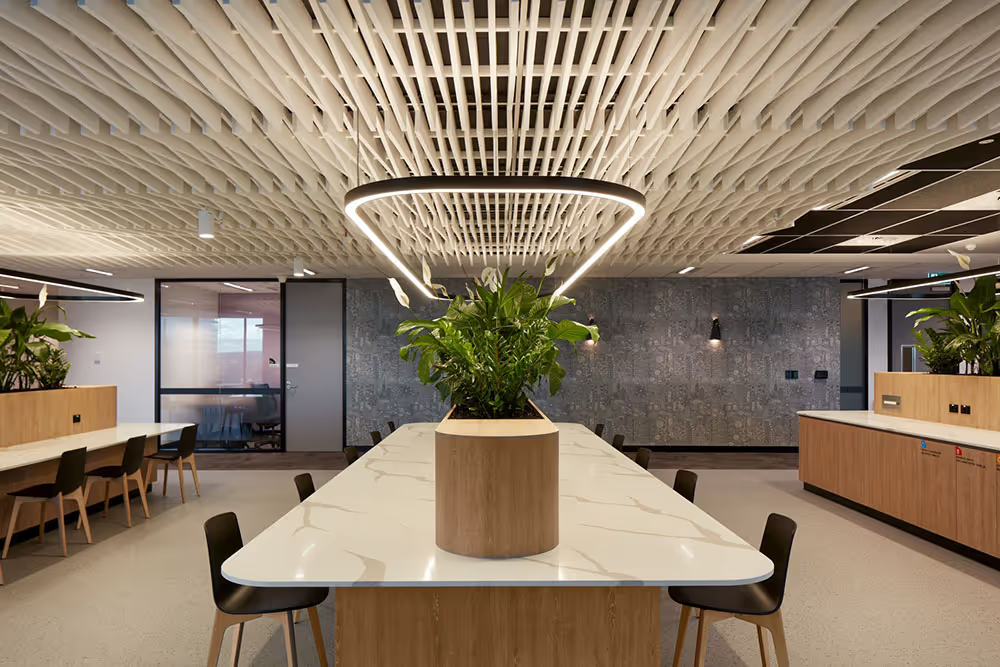
- Offices and education environments with screen-based tasks
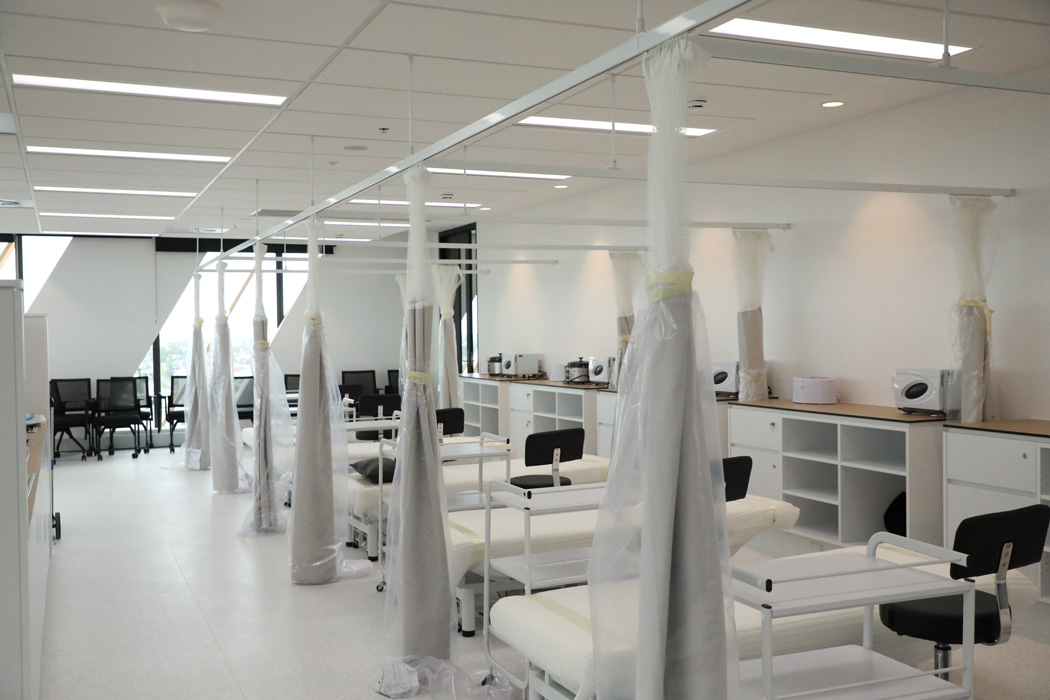
- Healthcare environments where comfortable ambient lighting is important
- Retail and hospitality spaces requiring bright yet controlled illumination
- Industrial and logistics environments where glare control supports safety
In each of these environments, the goal is the same: deliver effective illumination while maintaining a comfortable visual experience for occupants.
A Balance of Comfort and Efficiency
One of the key advantages of CDP optics is that they can improve visual comfort without sacrificing energy performance.
By guiding light into useful directions rather than scattering it broadly, prismatic optical systems can improve the utilisation of lumens and reduce wasted light. In many cases this allows designers to achieve target illuminance levels with fewer luminaires or lower wattage systems.
This combination of efficiency, visual comfort and optical control is why CDP and micro-prismatic technologies have become an important part of modern LED luminaire design.
Learn More
For a deeper technical explanation of CDP optics, luminance control and prismatic lens technologies, refer to the Novon Academy technical bulletin: ***Add link***

Related content

Technical Bulletin: Equivalent Melanopic Lux & Melanopic Ratio in WELL v2
Lorem ipsum dolor sit amet, consectetur adipiscing elit. Suspendisse varius enim in eros elementum tristique. Duis cursus, mi quis viverra ornare, eros dolor interdum nulla, ut commodo diam libero vitae erat. Aenean faucibus nibh et justo cursus id rutrum lorem imperdiet. Nunc ut sem vitae risus tristique posuere.
Why Circadian Lighting Metrics Matter for Modern Commercial Spaces
Lorem ipsum dolor sit amet, consectetur adipiscing elit. Suspendisse varius enim in eros elementum tristique. Duis cursus, mi quis viverra ornare, eros dolor interdum nulla, ut commodo diam libero vitae erat. Aenean faucibus nibh et justo cursus id rutrum lorem imperdiet. Nunc ut sem vitae risus tristique posuere.
Technical Bulletin: Cyanosis Observation Index (COI) and AS/NZS 1680.2.5:2018
Lorem ipsum dolor sit amet, consectetur adipiscing elit. Suspendisse varius enim in eros elementum tristique. Duis cursus, mi quis viverra ornare, eros dolor interdum nulla, ut commodo diam libero vitae erat. Aenean faucibus nibh et justo cursus id rutrum lorem imperdiet. Nunc ut sem vitae risus tristique posuere.