






Conical De‑Glaring Prism (CDP) Lens Technology, Light‑Guiding Prismatic Plates and Micro Conical De‑Glaring Prisms


1. Introduction
Conical De‑Glaring Prism (CDP) lens technology has emerged as a key optical solution for LED luminaires designed to deliver both high energy efficacy and superior visual comfort. By controlling luminance at critical viewing angles and redistributing light into useful task zones, CDP optics can significantly reduce discomfort and disability glare while maintaining, or even improving, luminaire efficiency.
Advanced manufacturers in the prismatic optics sector supply a variety of light‑guiding prismatic plates and micro‑structured conical de‑glaring lenses that are widely used in professional lighting for offices, education, healthcare and retail.
This bulletin consolidates key principles of CDP lens technology, including content aligned with the attached class material on discomfort glare, contrast and luminance control.
2. Discomfort and Disability Glare: Design Context
With regard to Design Concept
- Discomfort glare arises when luminance and contrast are greater than the eye can comfortably adapt to, typically from luminaires, windows or reflections
- The effect is cumulative; prolonged exposure can lead to eye fatigue and perceived visual discomfort.
- The degree of discomfort glare depends on:
- Luminance and apparent size of the source,
- Position of the source relative to the line of sight,
- Background luminance (usually the ceiling/walls) against which the source is viewed.
Contrast is defined as:
- White stimulus on white background → ~0% contrast.
- Black stimulus on white background → ~100% contrast.
High‑output LED luminaires without adequate optical control can produce:
- Excessively high luminance at critical angles (high contrast between the light source and ceiling/walls),
- Reflected images of the LED source in computer screens or glossy surfaces, leading to disability glare (contrast reduction of the visual task).
The design objective is therefore:
To negate direct view of the light source without unduly restricting light distribution in areas of task illuminance.
CDP optics, light‑guiding prismatic plates and micro‑conical prisms are key tools to achieve this.
3. Principles of Conical De‑Glaring Prism (CDP)Technology
3.1 Concept and Geometry
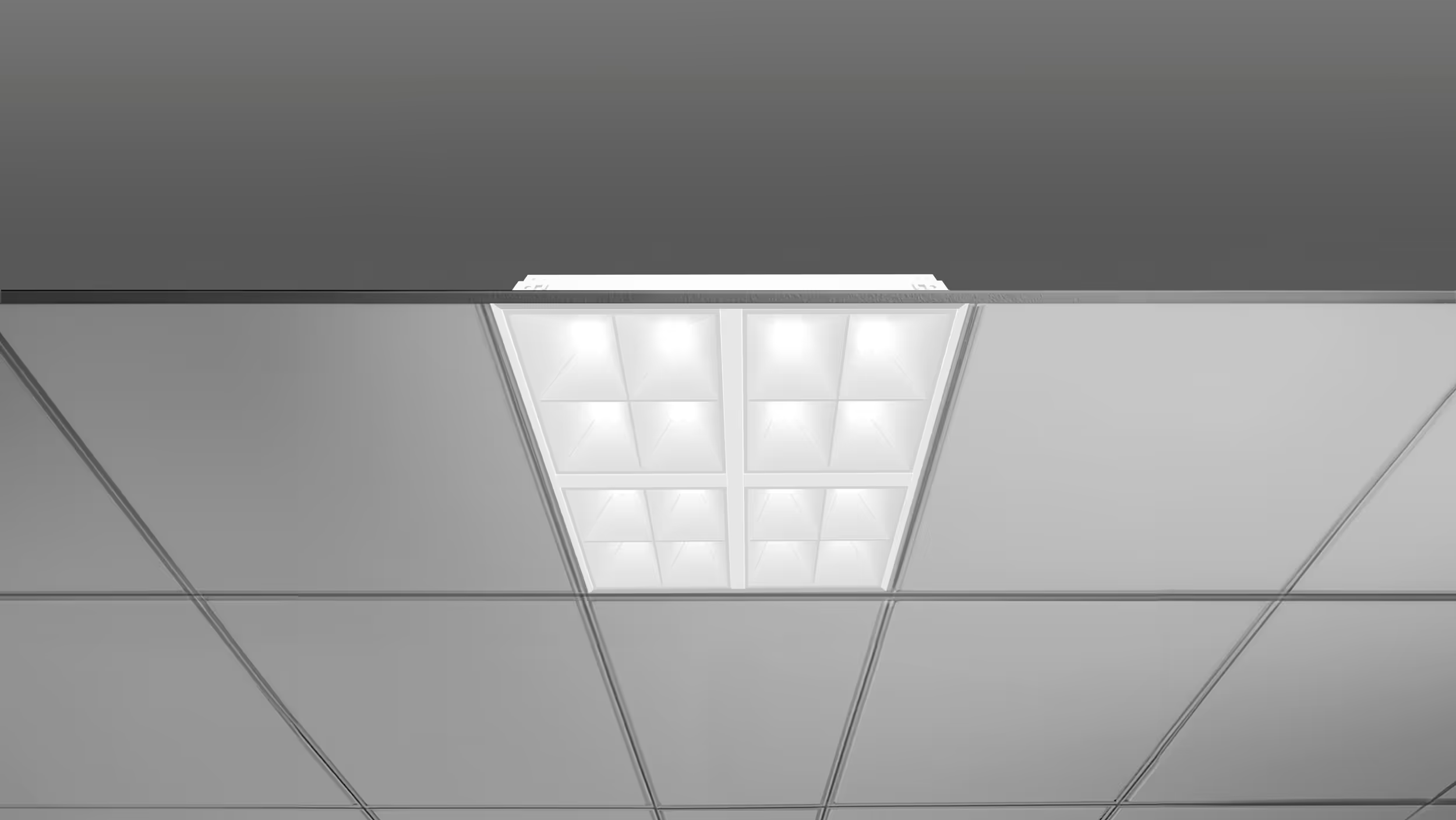
CDP panels consist of a regular array of conical or quasi‑conical micro‑prisms moulded or embossed into optical‑grade plastic:
- The cones are designed so that light is emitted primarily within a controlled shielding angle (commonly around 65° from the nadir, i.e. “within a 65° angle”).
- At viewing angles beyond this shielding angle, luminance is significantly reduced, limiting glare for observers at typical office viewing directions (seated/standing positions looking at screens or across the room).
For lighting design intent:
- “The cones in the CDP panel are designed to direct the light within a 65° angle.
- “This makes it possible to limit glare at critical angles.”
- “Efficiency is also improved by allowing light at higher angles to be re‑refracted and gain a ‘second chance’ to be directed into the area below.”
In practice, the conical surfaces control both direct transmission and multi‑pass redirection of light, simultaneously:
- Limiting brightness at high longitudinal and transverse angles (glare reduction), and
- Maintaining high luminaire efficiency by refracting previously “lost” high‑angle light back into the useful field.
3.2 Luminance Control at Critical Angles
CDP optics control the polar distribution of luminance (cd/m²) rather than only luminous flux (lm):
- High luminance peaks at angles near 65–80° from the vertical are characteristic of bare LED sources; CDP lenses attenuate these peaks.
- This reduction in high‑angle luminance:
- Decreases the contrast ratio between luminaire and surrounding surfaces
- Reduces the probability that the luminaire appears as a bright “hot spot” in peripheral or direct vision.
- Minimises the Unified Glare Rating (UGR) in typical indoor lighting designs.
This is especially important with high‑flux LED modules where the LED chip or cluster can be clearly visible and is small, extremely bright and often located in the “Glare Red Zone” (approximately 12–15 mm light‑emittingareas producing harsh visual appearance if not optically managed).
4. Light‑Guiding Prismatic Plates
Specialist manufacturers produce light‑guiding prismatic plates often used as:
- Primary diffusers in flat panels and linear luminaires,
- Secondary optics in multi‑layer systems (e.g. combined with a back reflector and a diffuser).
4.1 Function
Light‑guiding prismatic plates:
- Guide and redistribute light from LED edge‑lit or back‑lit arrays via total internal reflection (TIR) and refraction.
- Provide tailored beam shaping (e.g. batwing distributions for uniform ceiling or wall illumination, or controlled forward throw).
- Improve utilisation factor by directing light towards task planes and away from inefficient directions.
4.2 Advantages
- Higher optical efficiency than simple opal diffusers, due to engineered prismatic micro‑structures.
- Ability to customise distributions (narrow, medium, wide, asymmetric) for different applications.
- Can be combined with CDP features to deliver simultaneous glare control and efficient guidance.
5. Micro Conical De‑Glaring Prisms
Micro‑conical prisms are a refinement of CDP technology where the conical elements are scaled to smaller feature sizes (often sub‑millimetre). Manufacturers employ precision tooling and replication techniques to createthese micro‑structures in PMMA, polycarbonate, or other optical polymers.
5.1 Key Features
- Fine micro‑structures minimise visible patterning; the luminaire face can appear uniform and “soft” to the viewe
- Enhanced glare cut‑off at defined viewing angles due to precise control of refraction and internal reflection.
- Potential for multi‑functional performance:
- Glare control,
- Beam shaping (e.g. corridor distributions),
- Integration with light guiding features in a single plate.
5.2 Visual Comfort & Contrast Management
By reducing high‑angle luminance and masking the direct viewof LED emitters:
- Discomfort glare is reduced, especially in VDT (visual display terminal) environments where reflections and veiling glare on screens are critical
- Disability glare is mitigated by maintaining higher contrast of the visual task:
- Minimising bright sources within or near the line of sight,
- Reducing reflected images of LED sources in glossy or specular surfaces.
This aligns directly with the class content: glare reducesthe effective contrast ratio of a task and can make words and imagesbarely visible.
6. Integration with Luminous Environment Design
Best practice lighting design identifies that discomfortglare can also be reduced by increasing the luminosity on walls and ceilings.CDP and light‑guiding prism technologies support this in several ways:
- Uplight components: Certain prismatic plates and CDP lenses can be designed to allow a controlled portion of light to be redirected upward, brightening the ceiling and improving background luminance.
- Wall‑wash distributions: Asymmetric prismatic structures can be used to direct more light toward walls, reducing contrast between the luminaire and vertical surfaces.
- Higher reflection factors: When used with high‑reflectance ceilings/walls, CDP and prismatic systems create a more balanced luminance field, reducing stark differences between the light source and its surroundings.
Combined strategies:
- Use well‑engineered luminaires with CDP and micro‑prism optics to control luminance at critical angles.
- Position luminaires and select distributions to increase wall and ceiling luminance (e.g. closer to walls, uplight components, appropriate surface reflectances).
- Ensure task illuminance is maintained with good uniformity while minimising direct view of the LED sources.
7. Energy Efficacy Benefits
Compared with purely diffuse (opal) solutions, CDP and light‑guidingprismatic plates enable:
- Higher transmission (less absorption/scattering losses) due to structured refraction rather than heavy diffusion.
- Directionality: More of the emitted lumens are directed into useful angles (task/ambient zones), improving the luminaire efficiency and utilisation factor.
- The “second chance” mechanism described in the class document (high‑angle light being re‑refracted into the lower hemisphere) further increases effective efficacy.
For a given target illuminance
- Fewer luminaires or lower input power may be required, reducing connected load and operational energy consumption.
- Improved visual comfort at the same or lower wattage, which is particularly valuable in office, education and healthcare settings.
8. Typical Applications
CDP lens technology and micro‑conical prismatic plates are particularly beneficial in:
- Offices and education:
- Low UGR, screen‑friendly lighting, high uniformity.
- Healthcare:
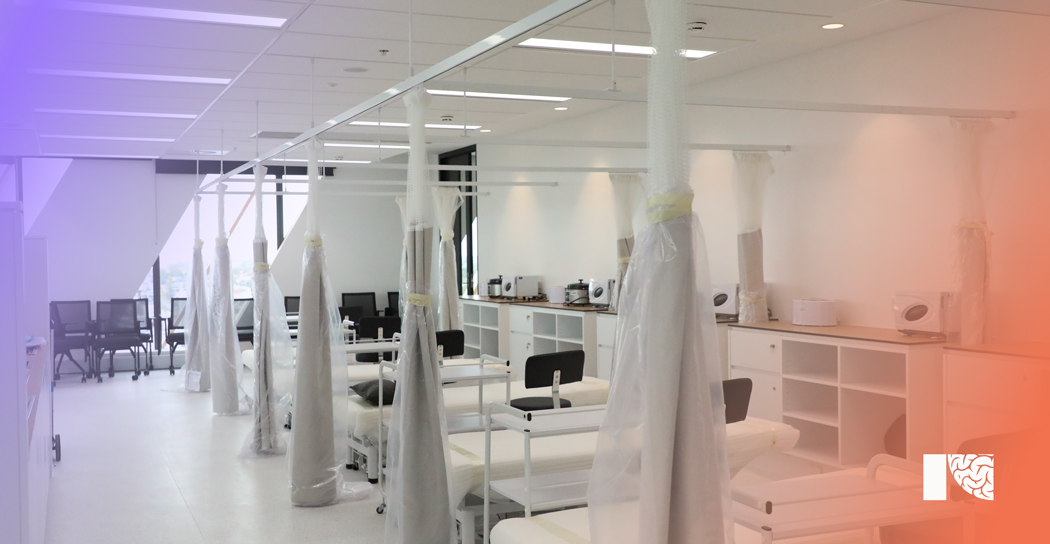
- Comfortable ambient lighting with reduced glare for patients and staff.
- Retail and hospitality:
- Bright yet comfortable spaces with visually appealing luminaires.
- Industrial and logistics (where appropriate optics are used)
- High mounting heights with controlled glare for workers and drivers.
9. Summary of Advantages
Optical and visual performance
- Controls luminance at critical viewing angles, reducing discomfort and disability glare.
- Supports low UGR luminaires suitable for screen‑based work.
- Maintains or improves contrast on visual tasks by reducing veiling glare.
- Enables soft, uniform appearance of the luminaire face with micro‑structured prisms.
Energy and system performance
- Higher optical efficiency than heavily diffusing materials.
- Improved light utilisation via guided and re‑refracted distributions (“second chance” light).
- Potential reduction in installed power for a given illuminance.
Design flexibility
- Configurable for uplight, wall‑wash and task‑focused distributions.
- Compatible with various luminaire formats (flat‑panel, linear, troffer, edge‑lit, back‑lit).
- Adaptable through different prism geometries, pitches and aspect ratios.
Related content

Technical Bulletin: Equivalent Melanopic Lux & Melanopic Ratio in WELL v2
Lorem ipsum dolor sit amet, consectetur adipiscing elit. Suspendisse varius enim in eros elementum tristique. Duis cursus, mi quis viverra ornare, eros dolor interdum nulla, ut commodo diam libero vitae erat. Aenean faucibus nibh et justo cursus id rutrum lorem imperdiet. Nunc ut sem vitae risus tristique posuere.

Why Circadian Lighting Metrics Matter for Modern Commercial Spaces
Lorem ipsum dolor sit amet, consectetur adipiscing elit. Suspendisse varius enim in eros elementum tristique. Duis cursus, mi quis viverra ornare, eros dolor interdum nulla, ut commodo diam libero vitae erat. Aenean faucibus nibh et justo cursus id rutrum lorem imperdiet. Nunc ut sem vitae risus tristique posuere.
Technical Bulletin: Cyanosis Observation Index (COI) and AS/NZS 1680.2.5:2018
Lorem ipsum dolor sit amet, consectetur adipiscing elit. Suspendisse varius enim in eros elementum tristique. Duis cursus, mi quis viverra ornare, eros dolor interdum nulla, ut commodo diam libero vitae erat. Aenean faucibus nibh et justo cursus id rutrum lorem imperdiet. Nunc ut sem vitae risus tristique posuere.